
Mobility scooters in Australia
State road rules, NDIS, aged care, GST and air travel details checked against official pages on 22 November 2026. We have not physically tested any scooter.
Australia’s scooter rules are set state by state, and the main funding routes are the NDIS and aged care. This guide compares NSW, Queensland and SA.
The differences are bigger than you might expect. Queensland makes you register a scooter (free), NSW and South Australia don’t, and weight limits run from none stated in NSW to 170 kg or 250 kg in South Australia depending on the device. In road law a scooter, or gopher, is a motorised wheelchair.
At a glance
| NSW | Queensland | South Australia | |
|---|---|---|---|
| Speed | Must not be capable of more than 10 km/h | Ride at no more than 10 km/h; the scooter must not be able to exceed 15 km/h on level ground | Pedestrian status if not capable of more than 10 km/h; faster devices must keep to 10 km/h on footpaths |
| Weight | No limit stated on the NSW page | Up to 170 kg unladen | Footpath use up to 170 kg unladen for faster-capable devices; licence and registration exemption up to 250 kg |
| Registration, insurance, licence | Not needed | Registration required, but free, and includes compulsory third party cover | Not needed within the exemption |
| Where to ride | Footpaths, shared paths, nature strips; bicycle lanes for up to 50 m | Footpaths or nature strips; if unsuitable, as close as possible to the side of the road | Footpaths |
In Victoria, the Department of Transport and Planning says you should only use a motorised mobility device if you have difficulty walking. Other states and territories have their own limits. Check with your state transport agency before you buy, especially for heavier or faster scooters.
Full guide: mobility scooter rules by state, which adds Victoria and Tasmania.
Words used in Australia
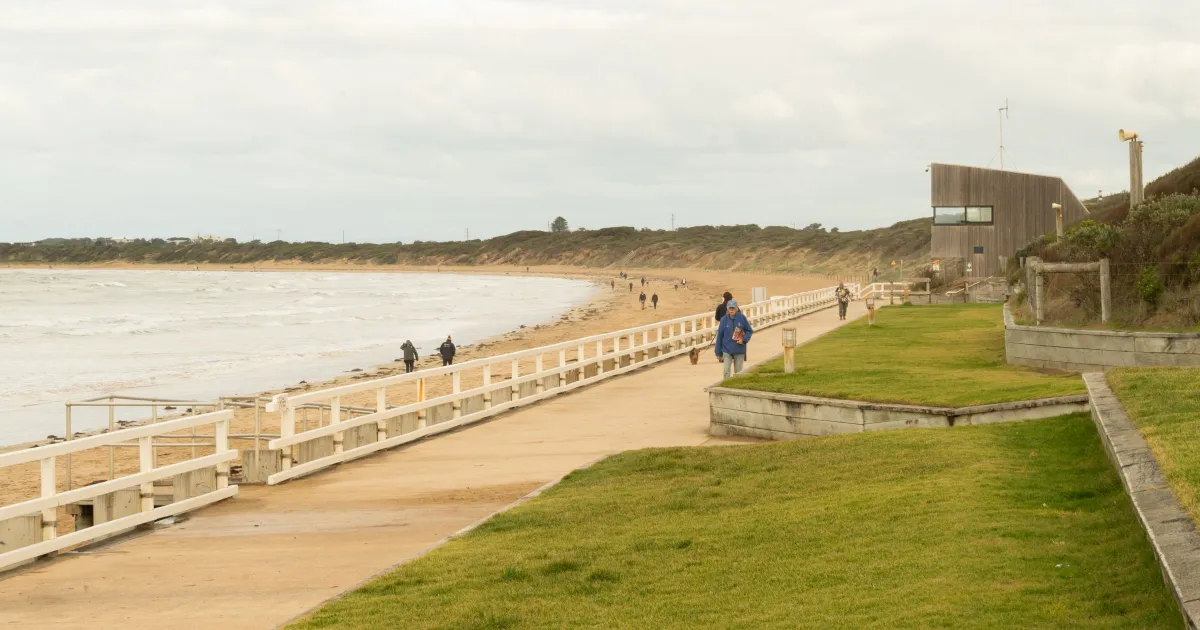
Australians say mobility scooter or gopher. Road rules call scooters motorised wheelchairs. You ride on the footpath or shared path.
Who can use one
NSW says the rider must have a reasonable need, such as a physical disability or limited mobility, and must not be affected by alcohol or drugs. Only one person may ride.
Paying for a scooter
NDIS
Who may be eligible: NDIS participants whose plan includes assistive technology. Joining the NDIS has its own access rules, and a scooter must meet the NDIS funding criteria for your needs.
How it is funded: the NDIS groups assistive technology by cost. Items under AUD 1,500 are low cost, AUD 1,500 to 15,000 mid cost, and over AUD 15,000 high cost, which needs an individual assessment and generally a quote. The NDIS page does not name scooters specifically.
Full guide: NDIS and mobility scooters.
Aged care: Support at Home (AT-HM scheme)
Who may be eligible: older people approved for Support at Home (which started on 1 November 2025) after an aged care assessment.
How it is funded: assessors can approve an assistive technology tier: low (under AUD 500), medium (up to AUD 2,000) or high (up to AUD 15,000, more with a prescribed need), generally for 12 months. Equipment attracts a participant contribution at the “independence” rate, with lifetime caps; prescription services have no contribution. The published guidance names wheelchairs and walking frames, not scooters, so ask your assessor whether a scooter can be funded.
State schemes
If neither the NDIS nor aged care covers you, ask your state or territory health department whether it has an equipment program. We have not yet checked these programs.
GST
The ATO says a medical aid is GST-free only if it is listed in the GST law, is specifically designed for people with an illness or disability, and is not widely used by people without one. Scooters are not named on the ATO page, so ask the seller whether they treat a scooter as GST-free.
Flying with a scooter
CASA says battery-powered mobility devices need the airline’s approval, and they go in the hold rather than the cabin. Contact the airline well before you fly.
More detail on batteries and airline rules: flying with a mobility scooter.
Choosing a scooter for Australia
- Check your state’s limits on speed and weight before you buy a large or fast model.
- Heat and sun: look for a canopy option and plan shaded storage and charging.
- Queensland: register the scooter before you ride. It is free and includes compulsory third party cover.
In hot weather, note Pride’s advice that storing or using lithium batteries somewhere very warm speeds up wear (see the battery guide). To shortlist models, use the Australia scooter index and compare tool, or see all our general guides on the Australia guides page.
Where to buy in Australia
We checked on 22 November 2026 that each seller below sells mobility scooters. Listing a seller is not a recommendation, and we are not paid by them. Compare prices, delivery, servicing and returns before you buy.
- Independent Living Specialists (ILS), which says it has around 20 stores across Australia.
- Scooters Australia, which says it has outlets in all capital cities and some regional areas, with portable, footpath and heavy-duty scooters.
- Your NDIS or aged care provider, if a scooter is being funded: they may need quotes from particular suppliers.
Frequently asked questions
Do I need to register a mobility scooter?
Not in NSW, and not in South Australia within the 250 kg exemption. In Queensland you must register it, but registration is free. Other states set their own rules.
Will the NDIS pay for a scooter?
Possibly, if you are a participant and it meets the funding criteria for your needs. The NDIS decides case by case.
Sources
- Transport for NSW, Mobility scooters. Read 22 November 2026.
- Queensland Government, Rules for motorised mobility device use (updated 31 October 2023) and Register a motorised mobility device (updated 29 September 2026). Read 22 November 2026.
- Victorian Department of Transport and Planning, Motorised mobility devices. Read 22 November 2026.
- Government of South Australia, Motorised wheelchairs (updated 13 April 2023). Read 22 November 2026.
- NDIS, Our Guidelines: how we fund assistive technology. Read 22 November 2026.
- Australian Government health.gov.au, AT-HM scheme and AT-HM scheme guidelines (October 2025). Read 22 November 2026.
- ATO, Medical aids and appliances (updated 8 October 2025). Read 22 November 2026.
- CASA, Travelling with mobility devices. Read 22 November 2026.
- Retailers: Independent Living Specialists; Scooters Australia (via Aged Care Guide listing). Read 22 November 2026.