
How to choose a mobility scooter
Last reviewed 22 November 2026
Work through these seven questions before you look at models. Each one rules some scooters out, and most link to a guide with the published figures behind the advice.
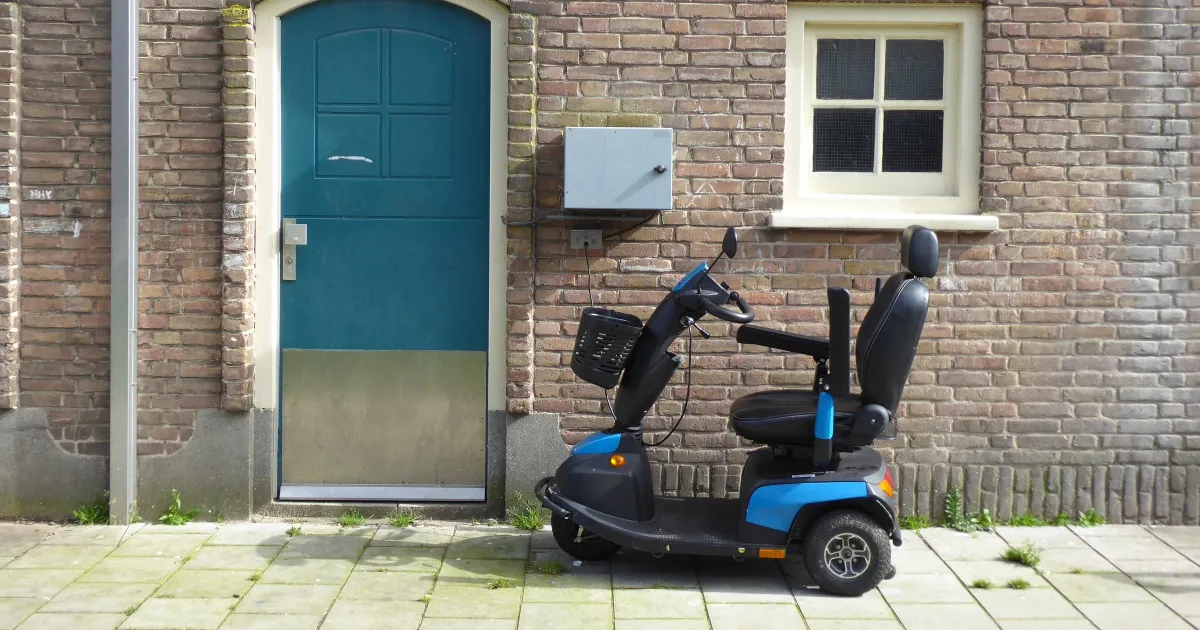
1. Where will you ride?
Small scooters suit shops, smooth pavements and trips in the car. Larger ones cope better with kerbs, slopes and rougher paths, and some countries let the largest types use the road. The rules are national or even local: in the UK it comes down to Class 2 or Class 3, while in Australia each state sets its own speed and weight limits. Check the guide for your country before you choose.
2. How far do you need to go?
Think about your longest regular round trip, not a typical one. The range on a spec sheet is a theoretical figure, and rider weight alone can cut it sharply: Pride’s own US spec pages show drops of 12% to 40% when the rider is at the scooter’s maximum weight. Hills and cold are likely to take more off. Leave yourself a margin. Our range guide has the figures.
3. What weight does it need to carry?
Check the maximum user weight against your own weight plus anything you carry, such as shopping or an oxygen bottle. Choose a scooter rated above that total, not at it, partly because range falls as you approach the limit. Folding and transportable scooters have the lowest limits; see weight limits by scooter type.

4. Will it go in a car?
Many smaller scooters fold or come apart. Look at the weight of the heaviest piece rather than the total, because that’s what you or a helper will lift into the boot. In our UK data, 14 of the 16 transportable scooters list a heaviest piece of 20 kg or less, and folding doesn’t mean lighter. Measure your boot opening too. More in folding vs transportable scooters.
5. Where will you store and charge it?
You need a dry, secure place with a socket nearby. Pride warns that a frozen lead-acid battery can be destroyed and gives 10 to 30 °C as the ideal temperature for charging one, so a cold garage or shed may not do. If you live in a flat, check the building’s rules on storing and charging scooters. The battery guide has the manufacturers’ instructions.
6. Comfort and controls
Look at the seat height and whether it swivels, the armrests, the tiller adjustment and whether the controls suit your hands. On the Pride scooters in our guides, one thumb lever drives the scooter and stops it when you let go; how mobility scooters work explains the controls. A home demonstration is the best way to check.
7. Servicing and repairs
Ask who will service the scooter, how quickly a local engineer can come out and what the warranty covers. Check the battery warranty separately: on Pride’s US models it ranges from 6 months for lead-acid to 3 years for one lithium model. Manufacturers’ manuals leave most repairs to the dealer, so having one nearby is worth more than it might seem; see maintenance.
Picks by country
Once you know the figures you need, our best-of pages pick the top models on each one from the scooters sold in that country: UK, US, Canada, Australia, New Zealand, Ireland and Germany (in German).